
Our Services
Comprehensive Eye Examination
Undertaking comprehensive eye examination plays an important role in prevention through early detection of vision changes and overall health. This involves a series of tests which are meticulously carried out to detect potentially sight-threatening eye conditions. Our comprehensive eye examination includes but not limited to the following:
- History of patient’s eye and general health.
- Visual Acuity Test to evaluate the sharpness of patient’s vision.
- Refraction to measure refractive errors (nearsightedness, farsightedness and astigmatism), with or without dilation of the eyes.
- Cover Tests to determine how well the eyes focus, move and work together and to identify strabismus or binocular vision problems.
- Tonometry or Glaucoma Test to measure the pressure within the eye.
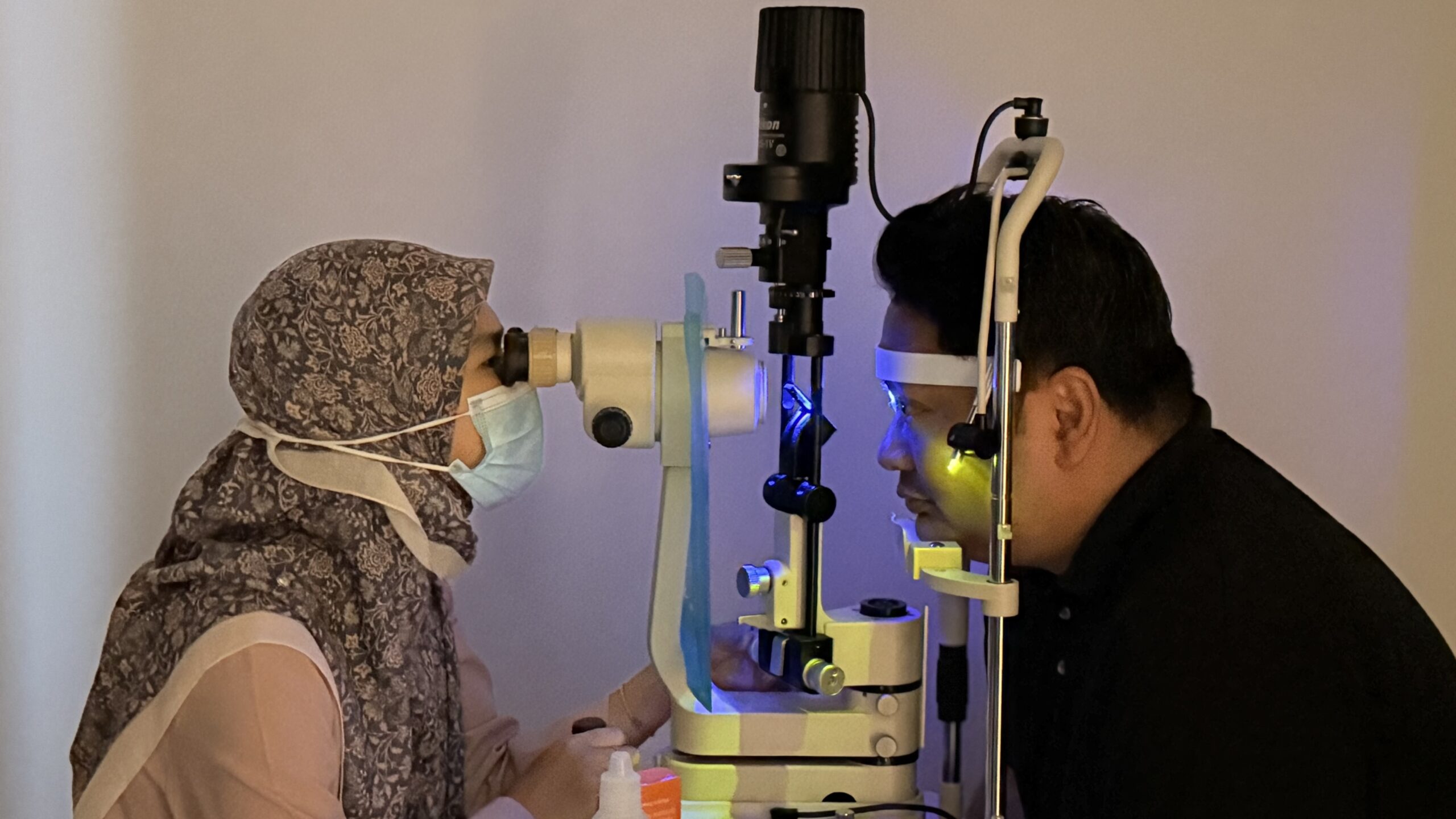
- Slit lamp Biomicroscopy to detect common eye diseases e.g. cataract, dry eyes, cornea scar, etc. by examining the front and back structure of the eye.
- Binocular Ophthalmoscopy (Funduscopy) to examine the interior of the back of the eye (retina) for potential risks of retinal inflammation, detachment, diabetic retinopathy, macular degeneration, etc.
- Topography / Keratometry to measure the curvature of the cornea.
As we age, comprehensive eye examination will become increasingly important in maintaining visual and overall health.

Routine eye examination is highly recommended at least every two years for adults aged below 60 years, and semi-annually or annually for those with vision problems and health risks.
For children, it is generally recommended that children should have their first eye check between 6 months and 2 years old and thereafter, every year. Children with family history of vision health issues or exhibiting vision symptoms should get a comprehensive eye examination as soon as possible.
