
Our Services

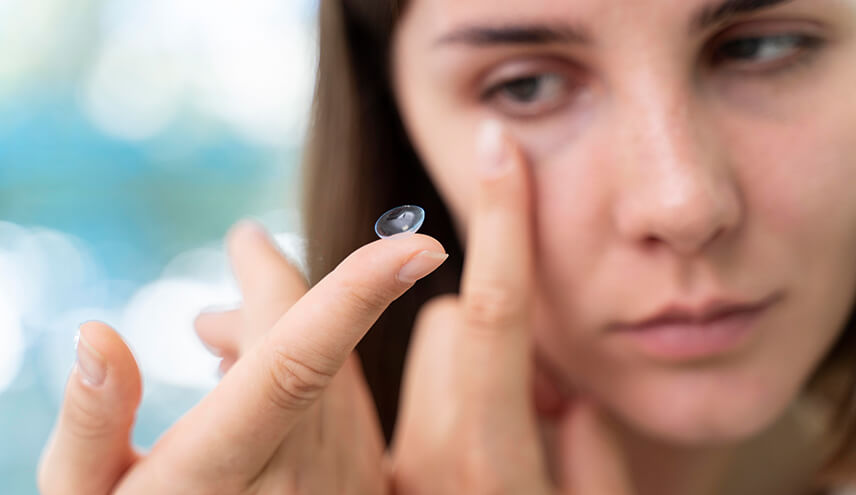
Myopia Management (Adults & Children)
Myopia (or nearsightedness) is the inability to see objects clearly at a distance. Myopia in children rarely occurs at birth but has a tendency to progress and increase, up until late teen years. In the last few decades, myopia prevalence in childhood years has been rising at an alarming rate.
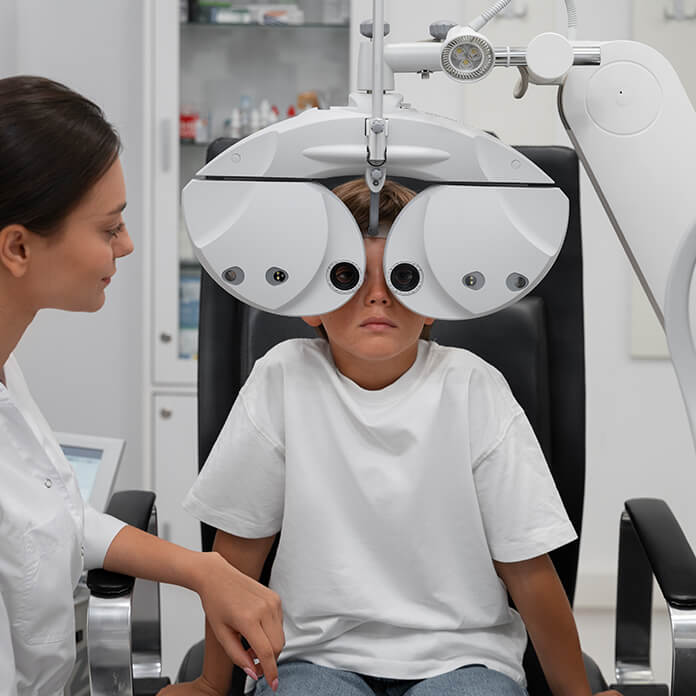
Eye Testing History
The objective of Myopia control is to slow down near-sightedness. To mitigate its progression, especially in children, the options for Myopia management include:
- Specific types of glasses
- Soft contact lenses
- Ortho-k lenses
- Atropine eye drops
However, there is no single option that is better than the rest as Myopia management is not just a single product, but rather, a program which requires close monitoring to ascertain its effectiveness.
Orthokeratology (Ortho-K)
Ortho-k is the use of specially customized contact lenses to temporarily reshape the cornea to improve vision. The lenses are rigid, gas-permeable which allows oxygen through. Unlike the normal contact lenses, Ortho-k lenses are worn overnight while asleep and removed upon waking, such that no spectacles or contact lenses are required for clear vision during the day. For best results, Ortho-k lenses should be worn consecutively for between 6 and 8 hours.
Ortho-k may be a good option for the following reasons:
- A safe and surgery-free method in myopia control
- For children and adults who are unable to wear glasses for any reason
- Have significant benefits in water sports and active lifestyles since the lenses are only worn at home (during sleep)
- Supportive research evidences on its effectiveness in controlling rapid increase of short-sightedness in children from age 6 for several years of wearing time
Atropine Eye Drops
Atropine was first developed in the 1800s as medicine for treating a variety of conditions such as heart disease, respiratory conditions, bowel disorders and some eye conditions. The first studies using atropine eye drops to slow myopia progression in children used 1% atropine, but these had significant side effects e.g. enlarged pupils made a child sensitive to light, and blurred their close-up vision. Newer studies on atropine for myopia control have shown that lower concentrations of 0.01% up to 0.05% have minimal side effects.
In a myopia control program, the atropine eye drops are administered as follows:
- Use once nightly
- 12 – 24 months
- Follow up visits quarterly (every 3 months)
- Close supervision by Ophthalmologists and clinical Optometrists
As atropine only acts to slow myopia progression, specific spectacles and/or contact lenses for myopia control are still needed to correct the blurred vision from myopia.