
Our Services

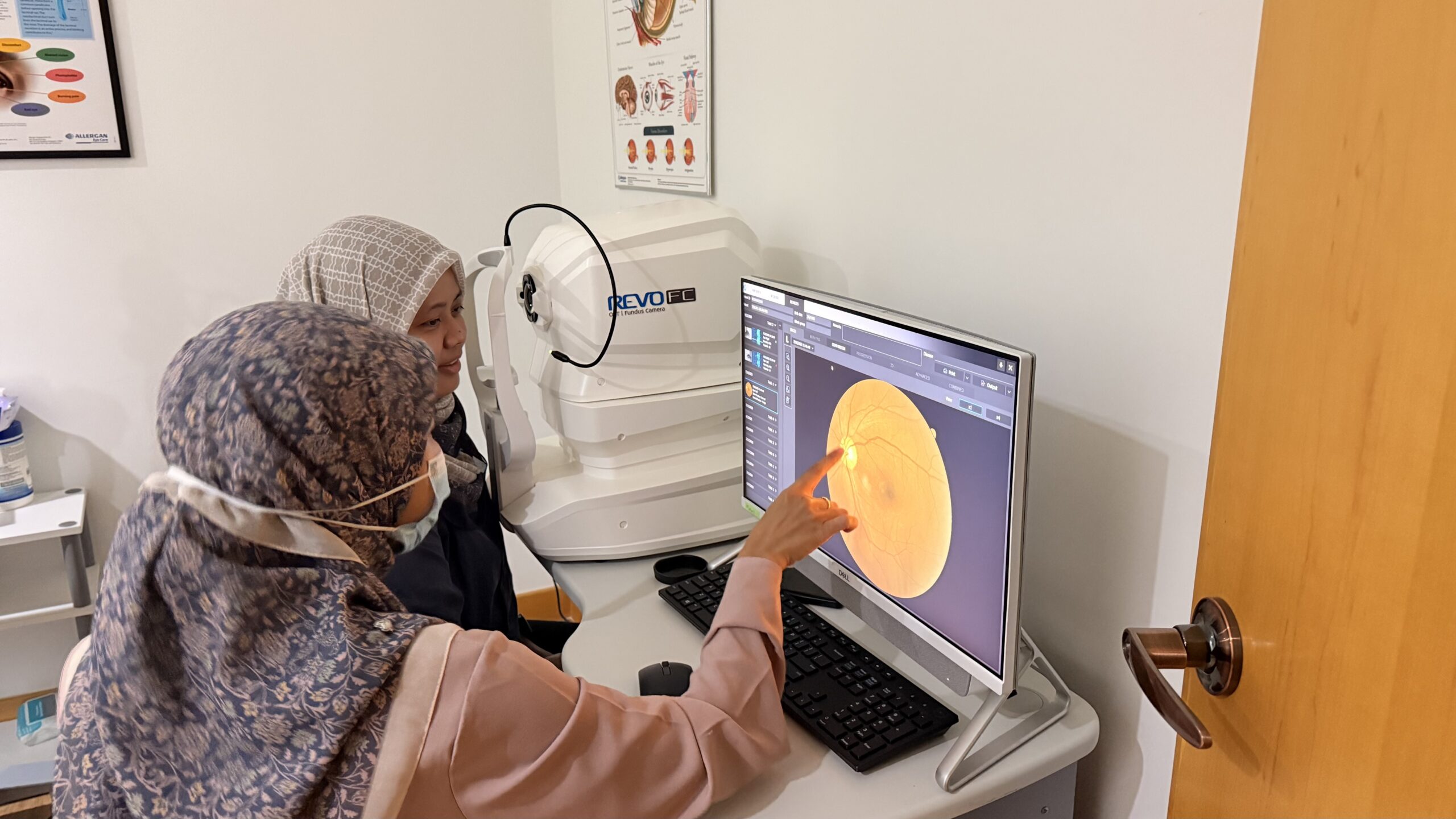
Retinal Examination
Retina Of The Eye:
The retina is a layer of cells at the back of the eyeball that converts light into nerve signals which are then sent along the optic nerve to the brain. The brain processes the signals which become images we see with our sense of vision. If the retinal nerves are damaged, the retina will not be able to send proper signals to the brain leading to unclear or disrupted vision and vision loss eventually if not treated early.
Signs Or Symptoms Of Retina Problems:
- Blurry or distorted vision
- Peripheral vision loss (tunnel vision)
- Double vision (diplopia)
- Eye flashes (photopsias)
- Eye floaters (myodesopsias)
- Light sensitivity (photophobia)
- Blind spots (scotomas) or visual field defects
- Vision becomes noticeably worse
It is crucial to go for retinal examination at least once a year to detect any changes to the eyes at early stages. This is particularly more important for people with diabetes because high blood sugar tends to damage the walls of small blood vessels in the eye. These vessels may develop clots, leak, thicken, or grow abnormal vessels like neovascularization.
Retinal Examination involves an evaluation of the back of your eye, including the retina, optic disk and the underlying layer of blood vessels that nourish the retina (choroid).
In Visionfocus, the examination usually involves the following simple steps:
- Dilation of the pupils with mydriatics eye drops: This is to temporarily enlarge the pupil, allowing for better visualization of the back of the eye when light is shined into the eye during the examination.
- Using Optical Coherence Tomography (OCT), a non-invasive imaging technique that uses light waves to create detailed, three-dimensional images of the retina and optic nerve. With the OCT, the retina’s distinctive layers and the optic nerve fiber layer can be seen, mapped out and their thickness can be measured and monitored for changes over time.